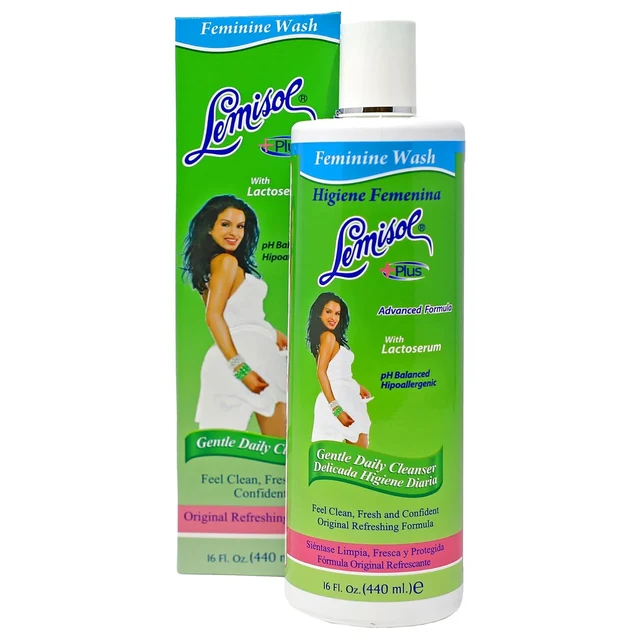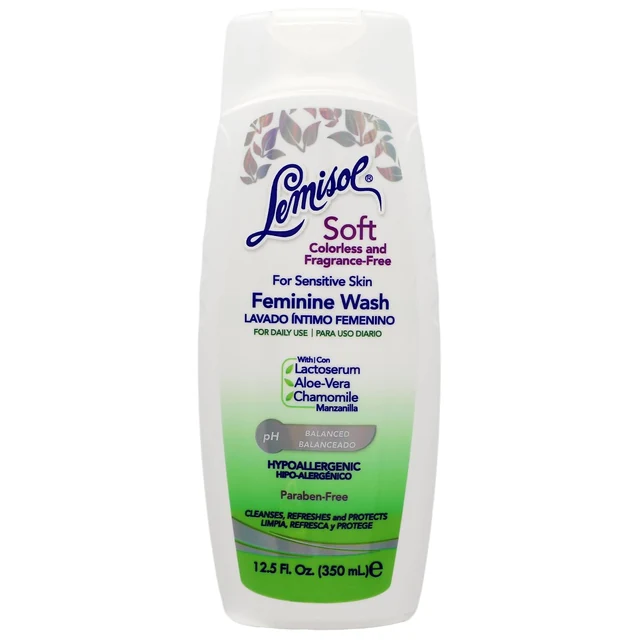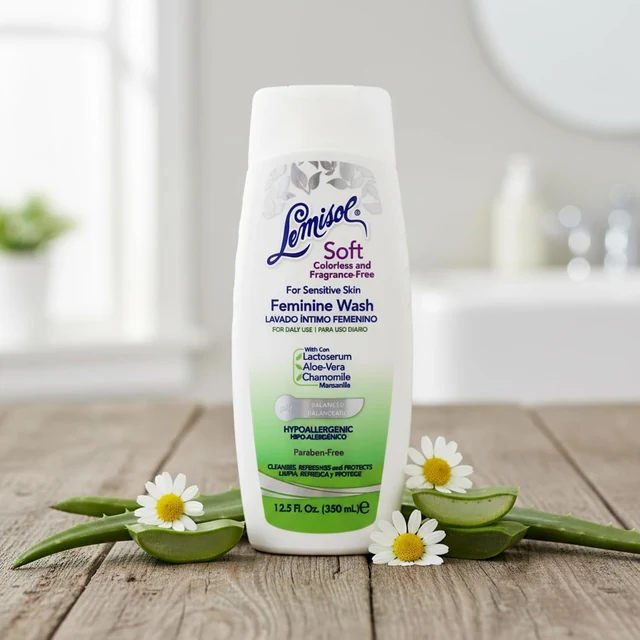
Choosing a Lemisol feminine wash starts with two names: Plus Original and Soft. Our Plus line has the original refreshing character. Soft is the fragrance-free option created for sensitive skin. Once you have chosen a formula, the next questions are practical: which bottle size is shown, how many bottles are included, and whether the ingredients match what you want to use.
The useful differences are on the label: formula name, ingredients, volume and quantity. Reading them together makes it easier to compare packs fairly. A wash is an optional cosmetic choice. You do not need a special cleanser to be clean, and a product description cannot tell you what is right for a medical concern.
Start with the formula, then choose the pack
A familiar bottle can make shopping feel straightforward until a different size or multipack appears beside it. Separate the decision into two parts. First, choose the Lemisol line you mean to buy. Then compare the amount and number of bottles within that line. A larger pack does not change the formula name, and a lower total price does not necessarily mean a lower price for the same amount.
If you already use Lemisol, your current bottle is a useful starting point. Read the full name on the front instead of relying on its color or the shape of the cap. Look for Plus or Soft, the volume, and any wording about fragrance. Keep the bottle nearby while you check the new product page so you can compare the details directly.
If this is your first purchase, begin with your preferences rather than a pack promotion. Someone who wants a fragrance-free product has a different starting point from someone looking for the familiar Plus Original formula. A discount is only useful after the product meets the needs that brought you here.
Lemisol Plus Original and Soft at a glance
| What to compare | Lemisol Plus Original | Lemisol Soft |
|---|---|---|
| Formula identity | The original refreshing formula | The fragrance-free formula created for sensitive skin |
| Bottle size to look for | 16 fl oz | 12.5 fl oz |
| Highlighted ingredients | Menthol, lactic acid, lactoserum, aloe and chamomile | Lactoserum, aloe and chamomile |
| Useful first check | Confirm that the product says Plus Original | Confirm that the product says Soft and fragrance-free |
| Next comparison | Bottle count and total fluid ounces | Bottle count and total fluid ounces |
The highlighted ingredients in this table are a quick introduction, not a complete ingredient declaration. Read the full list on the exact bottle you intend to purchase, particularly if you avoid a specific ingredient. Do not infer that an ingredient is absent simply because it does not appear among a product's highlights.
When you are looking for Plus Original
Begin with Lemisol Plus Original if that is the formula you recognize and want to repurchase. The 16 fl oz bottle and the Plus name are useful identifiers. Menthol is one of the highlighted ingredients, so someone who avoids menthol should examine that detail before choosing a pack.
Words such as refreshing describe the product's character. They do not measure how clean you are or establish that a stronger sensation is better. You do not need to pursue a particular feeling to complete washing. Let the formula information and your own preferences guide the decision, rather than assuming that the most noticeable sensation is the most effective choice.
When fragrance-free is your priority
Start with Lemisol Soft when avoiding added fragrance is central to your choice. Soft comes in a 12.5 fl oz bottle and is presented for sensitive skin. Those details help you distinguish it from Plus when several similar product photographs appear together.
“For sensitive skin” describes the product's intended audience. It is not a promise that every person will tolerate every ingredient. If you have a known allergy or have been given specific advice by a clinician, use that information when reading the label. Choosing a line by its name should be the beginning of that check, not the end.
Fragrance-free does not always mean no smell
Fragrance-free and unscented can sound interchangeable, but they answer different questions. In its explanation of cosmetic wipes, the FDA says that unscented products may use masking fragrance, while fragrance-free products should not contain added fragrance ingredients. Other ingredients can still have their own smell. The distinction is explained in the FDA's guidance on cosmetic fragrance terminology.
For shopping, this means you should look for the actual fragrance-free wording when that is your preference. Do not substitute a description such as light scent, clean scent or subtle scent. A pleasant fragrance description may be useful to someone who wants fragrance, but it does not answer the question for someone who is trying to avoid it.
The ingredient list provides another layer of information. Read it as a complete list rather than searching only for a familiar flower or plant name. If an ingredient name is unclear and the answer affects whether you can use the product, seek clarification before purchase. A bottle's color, a picture of aloe, or a minimal package design cannot replace that information.
You also do not need to justify a fragrance preference. Choosing without added fragrance can be a simple personal decision. Our Soft line gives you a clear place to begin comparing, without requiring you to frame your preference as a diagnosis.
Read the front and back of the bottle together
The front label is designed to help you recognize the product quickly. The back or side panel carries details that take more attention: the ingredient declaration, directions, warnings and other product information. Both views matter. A front photograph may show the correct line while leaving your most important question unanswered.
Use the available product photographs to identify the bottle, and read the complete ingredient panel on the packaging you receive. If you are using a phone, enlarge a label view instead of guessing at small text. Compare the product title with the visible bottle name and volume. When choosing a multipack, check the written quantity as well as the picture, since a main image may focus on one bottle.
The FDA explains that cosmetic ingredients are generally listed in descending order of predominance. That makes the list useful for identifying what is present, but it is not a recipe with exact percentages. Its cosmetic ingredient names guidance also explains why you may see different naming conventions on labels.
Use the declaration to answer a concrete question, such as whether it names an ingredient you already know you avoid. Do not try to calculate the concentration of lactic acid, menthol or a botanical from its position alone. Two formulas can share several ingredient names without being identical, and a short marketing description cannot establish that two bottles are interchangeable.
What highlighted ingredients can tell you
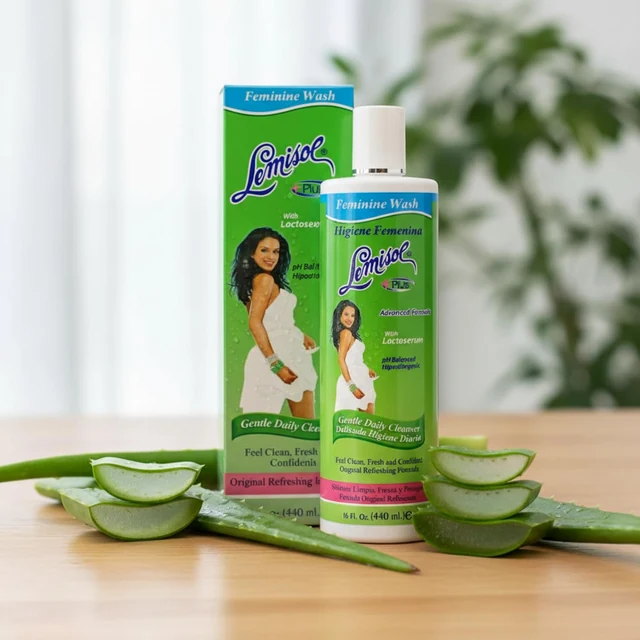
Ingredient highlights make it easier to recognize features of a formula, especially when you are comparing two product lines. Our Plus Original description names menthol, lactic acid, lactoserum, aloe and chamomile. Soft highlights lactoserum, aloe and chamomile. Treat those names as a way to begin reading more closely.
A highlight does not tell you the ingredient's percentage, the complete formula, or how your skin will respond. It also does not establish a medical result. For example, seeing lactic acid in a wash description is not a reason to use it to treat an infection. Seeing a botanical does not establish that the entire product is suitable for someone with a particular allergy.
Keep your question specific. If you are avoiding fragrance, check fragrance information. If you are avoiding menthol, read the full declaration for menthol. If you are trying to identify the same wash you bought before, compare the formula name and ingredient panel. This is more useful than deciding from the number of familiar ingredients mentioned on the front.
Likewise, the word hypoallergenic should not close the conversation. The FDA notes that there is no federal standard or definition governing that term and that no cosmetic can be guaranteed never to cause an allergic reaction. Read its explanation of hypoallergenic cosmetics if that claim is part of your shopping decision.
Keep external cleansing and vaginal care distinct
The vulva is the external genital area; the vagina is internal. Lemisol feminine wash is an external-use product. Do not use it inside the vagina or for douching. In its patient guidance on vaginitis, the American College of Obstetricians and Gynecologists states:
“Use plain warm water to clean the vulva.”
American College of Obstetricians and Gynecologists, Vaginitis
The same guidance advises against douching. A cleanser is therefore an optional purchase, not a requirement for vaginal health. Neither Plus nor Soft should be treated as a remedy for itching, burning, unusual discharge or a suspected infection. Those concerns call for medical advice, particularly when symptoms persist or return.
If you choose to use a wash, follow the directions and warnings on the bottle you have. Do not adapt instructions from a different cosmetic or turn a pack size into a suggested routine. More bottles simply mean more product in the order; they do not tell you to wash more often.
Shopping information can help you compare two bottles. It cannot identify the cause of discomfort or decide whether a cosmetic belongs in your care plan. When a clinician has given you personal guidance, bring the product label to that conversation so the discussion concerns the actual formula.
Compare fluid ounces, not just the number of bottles
Plus Original and Soft have different bottle volumes, so bottle count alone does not make a fair comparison. One Plus bottle contains 16 fl oz, while one Soft bottle contains 12.5 fl oz. A two-bottle Plus pack contains 32 fl oz. These are different amounts of wash, even before you compare their formulas.
The calculation is simple: multiply the volume of one bottle by the number of bottles included. Then divide the current pack price by that total to find a price per fluid ounce. Use the same unit on both sides of the comparison. A price per bottle and a price per fluid ounce answer different questions.
For example, if you are comparing two pack sizes of Plus Original, first confirm that every bottle is 16 fl oz. Work out the total volume of each pack, then compare its current cost. This lets you see whether buying more actually reduces the cost for the same amount, without being distracted by a larger headline price.
When comparing Plus with Soft, keep the formula decision in view. A lower price per ounce does not make one formula a substitute for the other. If fragrance-free is the reason you are shopping, the relevant comparison is among suitable Soft options, not simply whichever pack has the largest total volume.
Choose an amount you can comfortably keep
A multipack can make sense when you already know the product and want spare bottles. It also takes up more cupboard space and asks you to buy more at once. Check the storage guidance on the packaging and consider the space you actually have before choosing the biggest pack.
A single bottle can be a more manageable first purchase if one is available. That is a question of quantity and budget, not a claim that a smaller bottle changes the formula. We do not estimate how many weeks a bottle will last because personal use varies and the label should guide use.
Make a comparison you can read at a glance
When several offers are open on your phone, write one short line for each: formula, bottle size, bottle count and total price. Put the formula first so a good-looking number does not distract you from the product you intended to buy. Leave out crossed-out prices while comparing what you would actually pay.
Imagine that one option is a single Plus Original bottle and another is a pack containing two of the same 16 fl oz bottles. The first contains 16 fl oz; the second contains 32 fl oz. Dividing each current price by its respective total gives you comparable figures. You can then decide whether any saving is worth buying the extra bottle now. Delivery charges or other checkout costs may change that decision, so confirm the final amount before ordering.
If you are buying for someone else
Ask for the full product name or a clear photograph of their current bottle. “The Lemisol wash” leaves room for a formula mix-up. A picture that includes the line name and volume is more useful than a description of the bottle color. If that person specifically asks for Soft, do not replace it with Plus because the pack appears to offer more for the price.
Agree on the number of bottles as well. Someone asking for one bottle may have limited storage or may simply prefer a smaller purchase. Keep the formula and quantity separate in your notes, then share the selected option before you order if either detail is uncertain. You can help with shopping without needing to ask personal questions about why they prefer a particular wash.
Check the selected offer before you finish shopping
Product pages can present several quantities close together. Before completing a purchase, reread the selected option in the order summary. Confirm the line, the volume per bottle and the pack count. If you change quantity, check whether you have changed the number of individual bottles or the number of multipacks.
That distinction matters. Ordering two units of a two-bottle pack would mean four bottles if the offer defines one unit as that pack. Read the selected option and order summary together rather than assuming the quantity control always counts individual bottles.
Also check the current price, seller, delivery estimate and available return conditions on the purchase page. These details belong to the offer you choose and can differ between orders. A familiar product photo does not by itself confirm the seller, shipment timing or conditions that will apply.
If a title says one thing and the selected option says another, pause before placing the order. Look for a clearer product detail or use the help available on that purchase page. Guessing at the bottle count to secure a promotion is rarely worth the inconvenience of receiving a different quantity.
After purchase, keep the confirmation where you can find it. It records what you selected and provides the starting point for delivery or order questions. Our shopping help explains how to find the available support options through the account used at checkout.
Use reviews for shopping context
Customer reviews can raise practical questions worth checking, such as whether a buyer received one bottle or a pack. They may also describe a person's preference for a scent or texture. Those experiences are individual, and a review may refer to a different size, an older order or another formula.
When a review catches your attention, look for the reviewed variant and compare it with the option you have selected. A comment about Plus should not be assumed to describe Soft. A photograph can help identify the package being discussed, but it should not replace the current product details or the label on your own bottle.
A review is also not a diagnosis or evidence that a wash will treat a health condition. Avoid choosing a formula because someone claims it cured symptoms. Keep medical questions with a qualified healthcare professional, and use reviews to identify ordinary shopping details you can independently check.
When your order arrives
Take a moment to match the delivery with your confirmation before putting the bottles away. Check the product name, size and count. Read the label on the bottle you received, even when it is a familiar purchase. Your order confirmation helps establish what you bought; the physical label tells you about the product in your hand.
Look for damage or leakage and keep the packaging if you need to raise an order issue. Photograph the relevant item and label so you can explain the problem clearly through the available order support. Do not rely on a memory of the main product image when describing a missing bottle or an incorrect size.
For your next purchase, saving a clear photo of the formula name and ingredient panel can make comparison easier. It gives you something specific to check against a new offer. You can then return to the line you want, choose a practical quantity, and confirm the details before you buy.